Why Are ADUs Popular in California?
By JC Pacific Corp Published 2026-09-01 Last professionally reviewed: September 2026
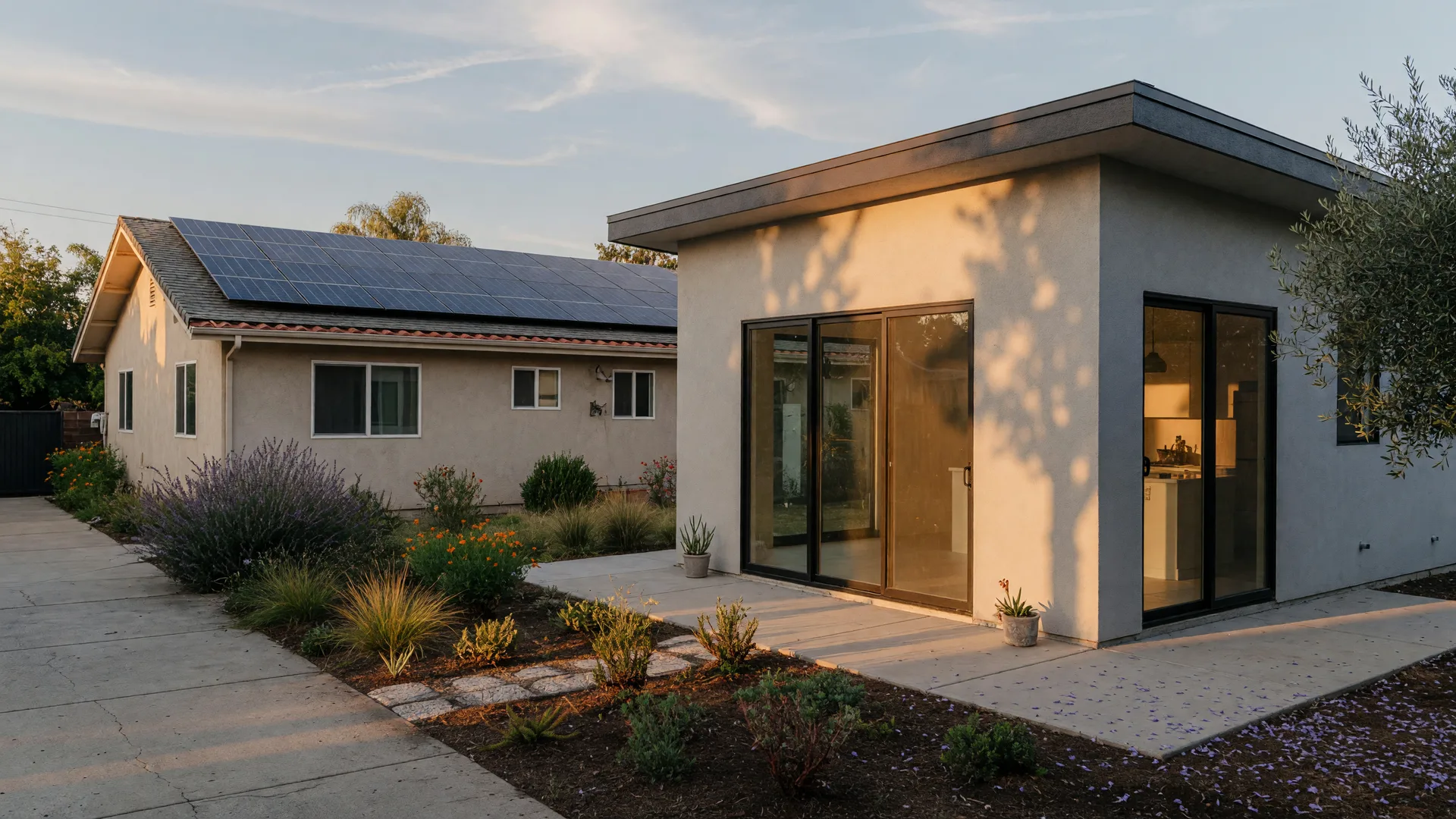
ADUs are popular because they can create flexible housing on existing property for family, renters, caregivers, adult children, older relatives, home offices, or future lifestyle changes.
How can an ADU be used?
Subject to law and permits:
- Long-term rental
- Housing for adult children
- Aging-parent residence
- Caregiver housing
- Multigenerational living
- Downsizing while family uses the primary home
- Guest space
- Flexible future housing
Short-term-rental use may be restricted or prohibited locally.
Why has California encouraged ADUs?
State laws have reduced many local barriers to help expand housing supply. Changes have addressed:
- Ministerial approval
- Parking
- Setbacks
- Fees
- Minimum size
- Conversion opportunities
- Review timelines
- Multifamily properties
- Owner-occupancy restrictions
Local building and safety standards still apply.
What limitations should owners remember?
An ADU may involve:
- Construction cost
- Financing
- Property taxes
- Insurance
- Utility upgrades
- Privacy
- Parking
- Management
- Rent control
- Maintenance
- Reduced yard space
Frequently Asked Questions
Does every ADU produce positive cash flow?
No.
Does an ADU automatically increase value?
No. Market acceptance, legality, design, income, and cost matter.
Can an ADU solve every family-housing need?
No. Accessibility, privacy, utilities, caregiving, and long-term plans should be considered.
Educational information
This content is for general educational purposes and is not legal, tax, appraisal, lending, electrical, engineering, construction, insurance, investment, utility-rate, zoning, architectural, or solar-production advice. California ADU laws, local ordinances, permit requirements, utility rules, tax provisions, solar programs, and financing standards change frequently. Consult appropriately licensed legal, tax, lending, insurance, appraisal, real estate, architectural, engineering, electrical, solar, and construction professionals regarding a specific property.
Next step: Define the intended use before choosing the design and financing.
Related guides
All 25 guidesPut this guide to work
The next step is a conversation with a local agent.
JC Pacific Corp is an Irvine-based Southern California brokerage helping buyers navigate offers, escrow, and financing. Tell us what you are looking for and we will point you to current options across the region.
A note on legal advice: These guides provide general, educational information about California real estate practice. They are not legal advice and do not create an attorney-client relationship. Mortgage information is general education, not individualized lending, tax or legal guidance. For advice about your specific offer, contract, closing or financing, consult a qualified California real estate attorney and a qualified mortgage professional.
A note on these solar and ADU guides: These articles provide general, educational information about California solar systems, PACE assessments, and accessory dwelling units. They are not legal, tax, appraisal, lending, electrical, engineering, construction, insurance, investment, utility-rate, zoning, architectural, or solar-production advice. A PACE assessment is an obligation repaid through a property-tax-bill assessment, not an ordinary solar loan, and California's active-solar property-tax exclusion is not permanent. No article guarantees solar production, savings, contract transfer, ADU value, or rental income. An address, a tax record, or an MLS listing never proves that an ADU is legal, and an unpermitted unit generally does not become legal through age or continued use. Verify current ADU law, local ordinances, permit requirements, utility rules, tax provisions, solar programs, and lending standards at publication time and again before any future update or transaction. Buyers and owners can request brokerage assistance in English, Simplified Chinese, and Traditional Chinese.