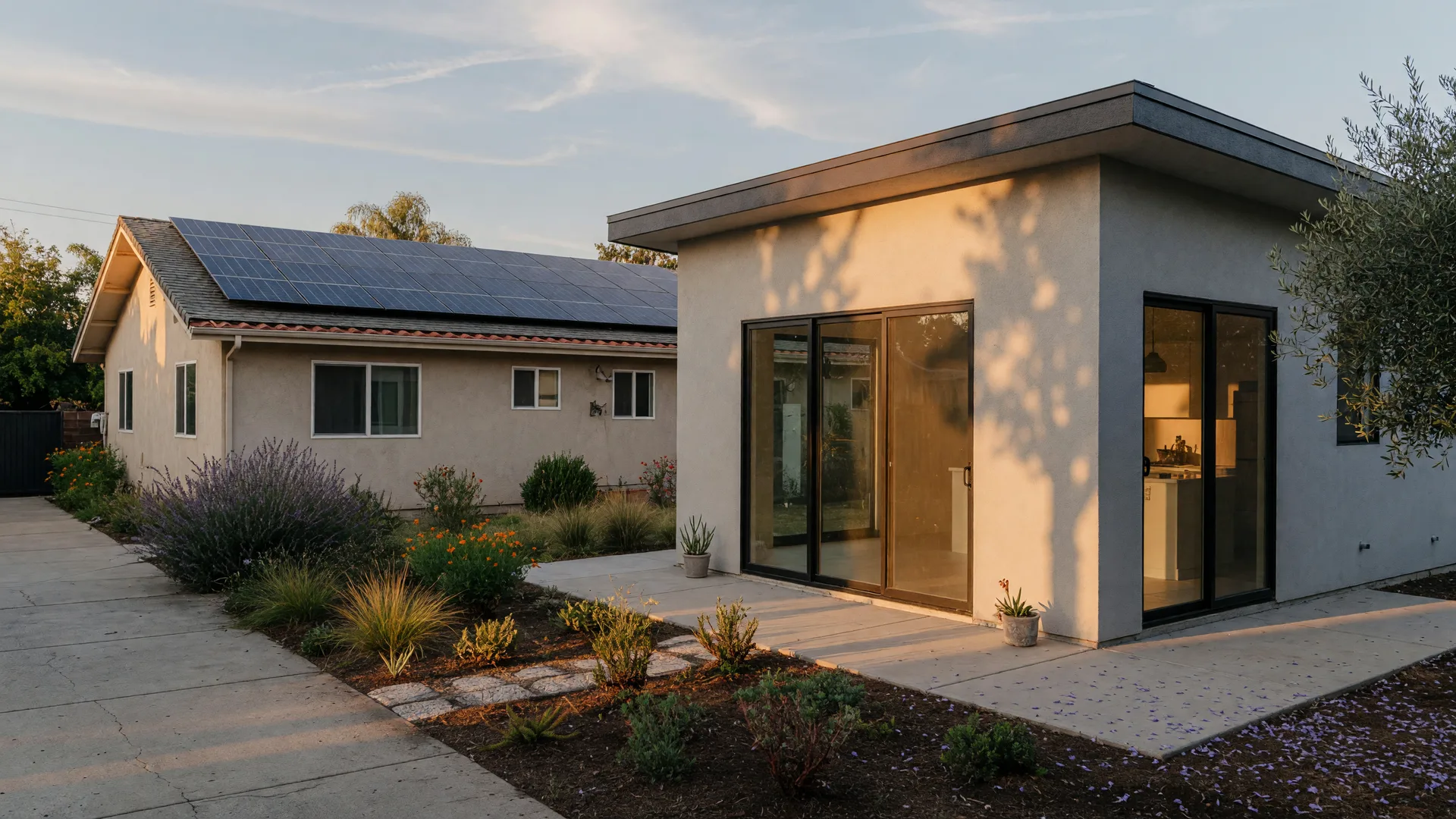
Buying a California Property With an Existing ADU
By JC Pacific Corp Published 2026-09-01 Last professionally reviewed: September 2026
Before buying property with an ADU, verify that the unit is legally permitted, matches approved plans, can be used as represented, and is properly addressed for financing, insurance, taxes, utilities, and any existing tenants.
What documents should buyers request?
- ADU permit
- Approved plans
- Inspection history
- Final approval
- Certificate of occupancy when applicable
- Address assignment
- Utility approvals
- Septic approval
- Rental agreement
- Rent ledger
- Security deposit
- Insurance
- Property-tax records
- Warranties
- Contractor invoices
- Solar records
What should be physically inspected?
- Foundation
- Roof
- Fire separation
- Electrical system
- Plumbing
- Heating and cooling
- Ventilation
- Windows and egress
- Moisture
- Sound separation
- Access
- Parking
- Drainage
- Utility meters
- Smoke and carbon monoxide alarms
What if the ADU has a tenant?
The buyer must evaluate leases, deposits, rent limits, just-cause protections, local laws, and possession expectations.
Frequently Asked Questions
Does an MLS bedroom count prove legality?
No.
Does a separate address prove permitting?
No.
Can the buyer occupy the ADU and rent the main home?
Possibly, subject to loan, insurance, zoning, and rental rules.
Educational information
This content is for general educational purposes and is not legal, tax, appraisal, lending, electrical, engineering, construction, insurance, investment, utility-rate, zoning, architectural, or solar-production advice. California ADU laws, local ordinances, permit requirements, utility rules, tax provisions, solar programs, and financing standards change frequently. Consult appropriately licensed legal, tax, lending, insurance, appraisal, real estate, architectural, engineering, electrical, solar, and construction professionals regarding a specific property.
Next step: Make ADU legal-status and document review part of the purchase investigation.
Related guides
All 25 guidesPut this guide to work
The next step is a conversation with a local agent.
JC Pacific Corp is an Irvine-based Southern California brokerage helping buyers navigate offers, escrow, and financing. Tell us what you are looking for and we will point you to current options across the region.
A note on legal advice: These guides provide general, educational information about California real estate practice. They are not legal advice and do not create an attorney-client relationship. Mortgage information is general education, not individualized lending, tax or legal guidance. For advice about your specific offer, contract, closing or financing, consult a qualified California real estate attorney and a qualified mortgage professional.
A note on these solar and ADU guides: These articles provide general, educational information about California solar systems, PACE assessments, and accessory dwelling units. They are not legal, tax, appraisal, lending, electrical, engineering, construction, insurance, investment, utility-rate, zoning, architectural, or solar-production advice. A PACE assessment is an obligation repaid through a property-tax-bill assessment, not an ordinary solar loan, and California's active-solar property-tax exclusion is not permanent. No article guarantees solar production, savings, contract transfer, ADU value, or rental income. An address, a tax record, or an MLS listing never proves that an ADU is legal, and an unpermitted unit generally does not become legal through age or continued use. Verify current ADU law, local ordinances, permit requirements, utility rules, tax provisions, solar programs, and lending standards at publication time and again before any future update or transaction. Buyers and owners can request brokerage assistance in English, Simplified Chinese, and Traditional Chinese.